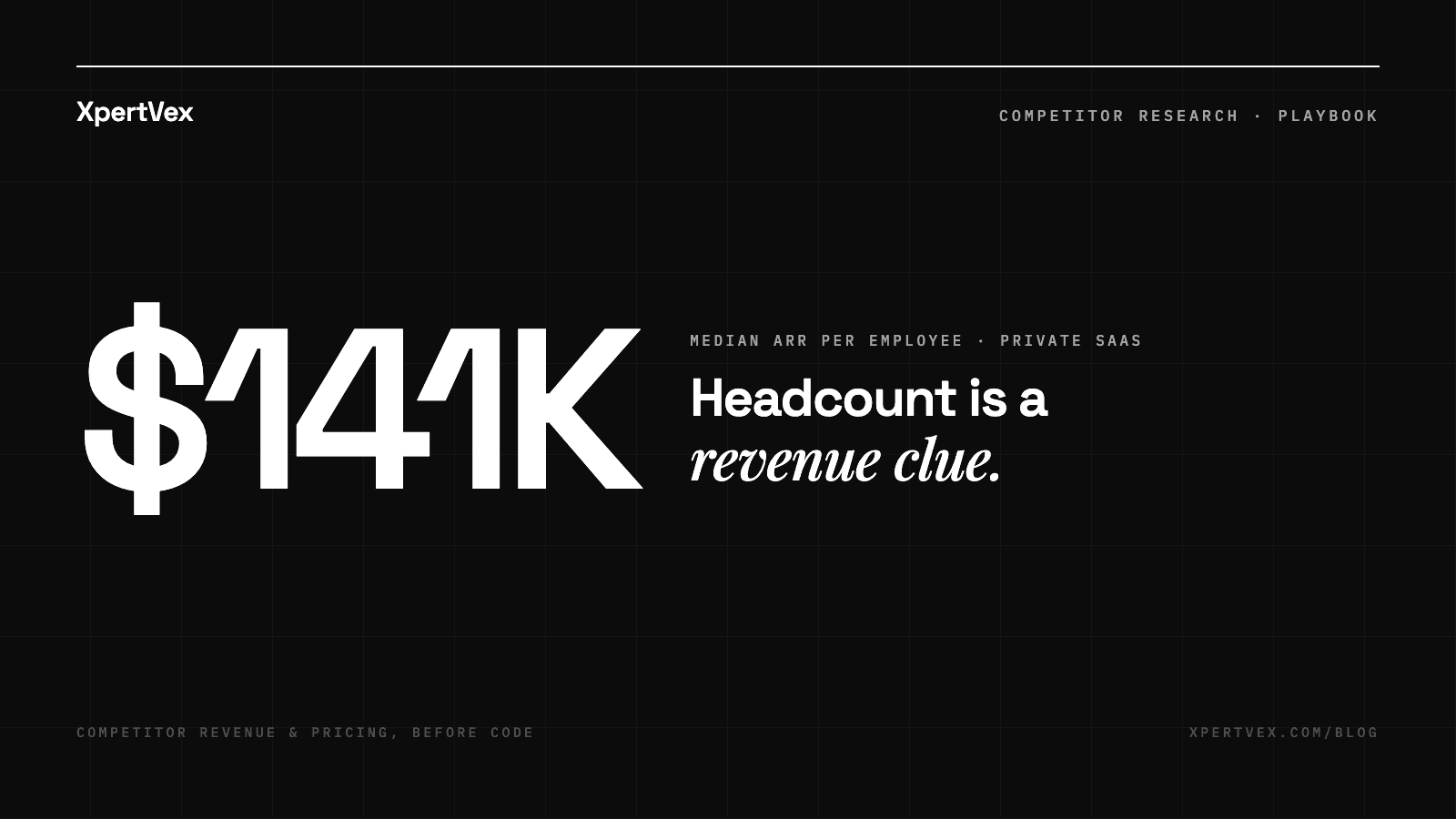
Most founders research competitors the same way: they open a rival's homepage, decide the design looks dated, and conclude they can do better. That tells you nothing. The useful questions are harder. How much money does this competitor make? What do customers actually pay? And what do those customers complain about?
You can answer all three, roughly, before you write any code. Everything below uses public information. No fake accounts, no scraping behind logins, no ethics you'd be embarrassed to explain. It's detective work, not espionage.
Part 1: Pricing — what customers really pay
Read the pricing page like an analyst
A pricing page tells you who the company thinks its best customer is. Look at:
- Where the "most popular" badge sits. That's the plan they want most customers on — and usually where most of their revenue comes from.
- What's gated behind "Contact sales". If the top tier hides its price, large customers are paying much more than the listed plans.
- The value metric. Per seat, per usage, per location or flat fee? It shows how the company grows revenue inside an account.
- What's missing from the cheap plan. The features held back are the ones customers value most.
Check the price history
Paste the pricing URL into the Internet Archive's Wayback Machine and step through the snapshots. Price rises that stick are a strong signal of pricing power. A free plan that quietly disappeared tells you the free users weren't converting. A new cheaper tier usually means competition arrived from below.